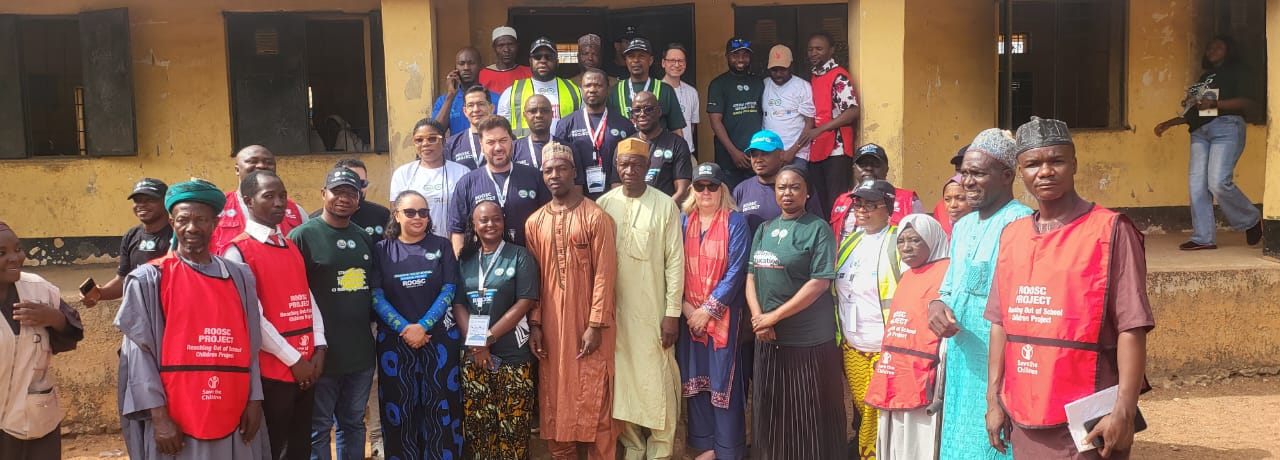
International development partners have called for stronger community participation in tackling the out-of-school children crisis in Kaduna State following a joint supervision mission under the Reaching Out-of-School Children Project.
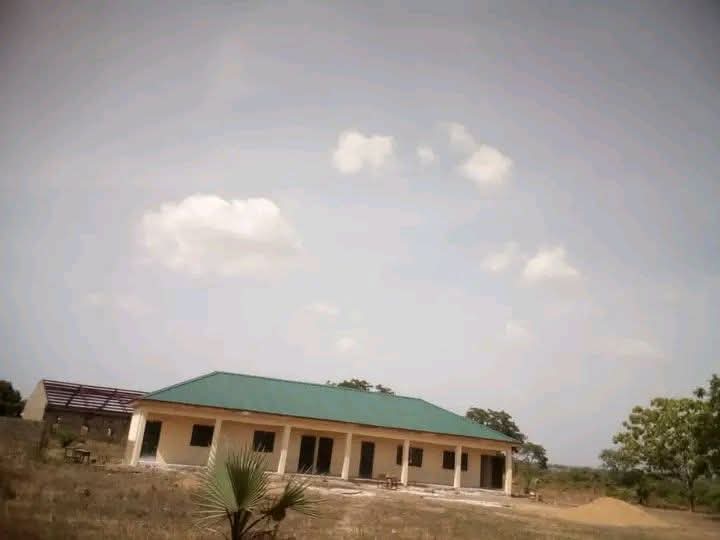
The mission brought together global education stakeholders to assess ongoing school construction, classroom renovations, and efforts to enroll out-of-school children into formal education across selected communities.
Project Coordinator of the Reaching Out-of-School Children Project, Ezra Angai, said the visit was aimed at assessing implementation progress and identifying challenges.
“Partners from all over the world have come to Kaduna to monitor, inspect and interact on the Reaching Out-of-School Children project implementation, assess how well it has gone, and also find solutions where there are challenges,” he said.
Angai noted that the mission included representatives from the Islamic Development Bank, Global Partnership for Education, Save the Children International and UNICEF, alongside officials from federal ministries and other development partners.
“We are happy and thankful to the Kaduna State Government and all our partners who have shown great commitment to this project. As the project management unit, we restate our commitment to delivering within scope and timeline,” he added.
Chief of Education at UNICEF Nigeria, Vanessa Lee, said UNICEF’s role focuses on strengthening education systems for sustainability.
“UNICEF is delighted to be involved in the Reaching Out-of-School Children programme in Kaduna. Our contribution is around system strengthening — helping the government develop and improve systems so that all parts work together,” she said.
Lee added that UNICEF is supporting teacher training, community engagement, and education data systems.
“We are working on developing digital data systems so children can be tracked in school, and also supporting planning and financing so that all parts of the system work together and children benefit,” she explained.
Speaking during the field visit, Dorian Gay of the Global Partnership for Education said overcrowding in classrooms highlights the urgency of the intervention.
“We have seen the construction of new classrooms and renovation of schools. In one of the schools, there are about 550 children for eight classrooms — that’s about 70 pupils per classroom,” he said.
He expressed optimism that ongoing construction would improve learning conditions.
“With the renovation, the number of children per class will go down dramatically to around 40, which will help teachers deliver better quality education and help children learn better,” Gay added.
He also praised Kaduna State authorities for their commitment to education reform.
“What we see is a very deep and proactive engagement of the Kaduna State authorities in reforming the education sector, which is very important,” he noted.
Deputy Country Director of Save the Children International, Jane Mbagi Mutua, described the project as impactful but said more work remains.
“We have seen construction of new schools, renovation and mainstreaming of children into formal primary schools. Great work is going on, but I would call it a drop in the ocean,” she said.
Mutua explained that the scale of the problem remains significant.
“We are looking at mainstreaming 100,000 children by the end of the project, yet we know there are almost 200,000 children who have been mapped out of school,” she added.
She urged communities to prioritize education.
“Please get your children to school. The best thing you can give your children is education,” Mutua said.
She further emphasized the protective role of education.
“When your children are in school, they are protected and able to fulfil their dreams and be the best they can be,” she stated.
Mutua also stressed the importance of learning outcomes.
“It’s not just about getting children into school, but keeping them in school and making sure they are learning,” she added.
Stakeholders say the project combines infrastructure development, teacher support, community mobilization, and education system strengthening to reduce the number of out-of-school children.
Partners expressed optimism that ongoing construction, expected to be completed by September, will create additional learning spaces and accelerate enrollment across affected communities in Kaduna State.