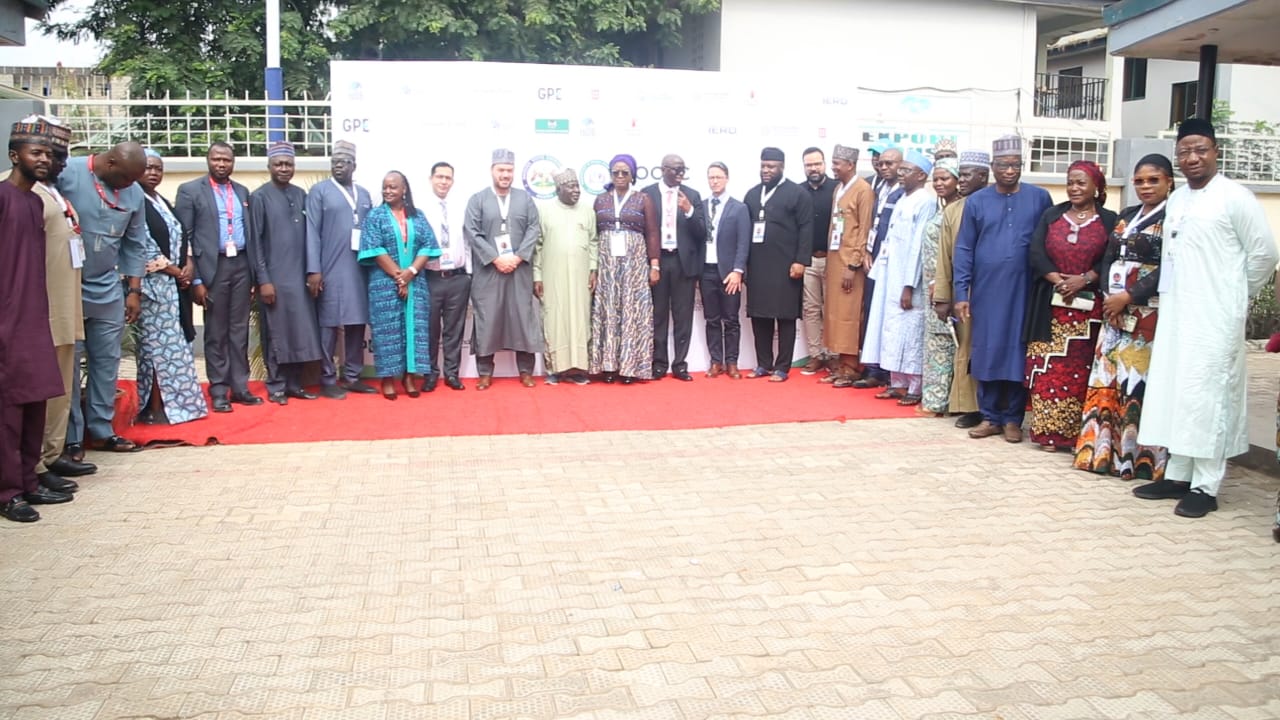
Kaduna State has hosted a high-level Joint Supervision Mission of the Reaching Out-of-School Children (ROOSC) Project, with the Federal Government and development partners reaffirming their commitment to return 100,000 out-of-school children to classrooms within four years.
The meeting brought together key stakeholders from the education sector, including representatives of the Federal Ministry of Education, international funding institutions and implementing partners, to review progress, identify challenges and strengthen collaboration.
Kaduna State Commissioner for Education, Professor Abubakar Sani Sambo, said the ROOSC Project reflects Governor Uba Sani’s strong commitment to human capital development and inclusive education.
He commended development partners — the Global Partnership for Education (GPE), Islamic Development Bank (IsDB), Kuwait Fund, Education Above All (EAA), Save the Children and UNICEF — for their sustained support in expanding access to quality education in the state.
Professor Sambo stressed that the state government remains determined to reduce the number of out-of-school children through sustained collaboration, improved infrastructure and enhanced teacher capacity. He also urged stakeholders at community and local government levels to support enrolment drives and effective monitoring.
Speaking on behalf of the Federal Government, Director of Basic Education in the Federal Ministry of Education, Dr. Folake Olatunji-David, reiterated the commitment of the Federal Government to ensuring inclusive and equitable access to basic education for all children.
She noted that addressing the out-of-school children challenge remains a top priority under President Bola Ahmed Tinubu’s education reform agenda, supported by initiatives such as the Nigerian Education Sector Renewal Initiative and other institutional frameworks.
Dr. Olatunji-David described the ROOSC Project as a strategic multi-partner intervention designed to tackle the root causes of the out-of-school crisis, noting that its success would demonstrate the effectiveness of coordinated, multi-sectoral approaches.
Representatives of development partners reaffirmed their support for the project, while highlighting the need for sustained collaboration to achieve set targets.
Speaking for the Islamic Development Bank, Jawara Gaye said the ROOSC Project is central to efforts aimed at improving access to education in member countries, adding that all partners remain committed to achieving success.
A representative of the Global Partnership for Education, Dorian Gay, said the initiative prioritises vulnerable and hard-to-reach children, particularly in fragile and underserved communities.
Also speaking, Deputy Country Director of Save the Children Nigeria, Jane Mbagi Mutua, described education as a critical tool for child protection and development, noting that the project provides an opportunity to secure a better future for beneficiaries.
Project Coordinator of ROOSC in Kaduna State, Ezra Angai, said the 2026 Joint Supervision Mission marks the project’s second year of implementation. He acknowledged challenges posed by inflation and exchange rate fluctuations but expressed confidence that the target of enrolling 100,000 children remains achievable.
In his remarks, UNICEF representative, Balad Ada, described the meeting as a significant step towards improving access to basic education, noting that lessons from the review would guide future interventions.
The mission is expected to strengthen coordination among stakeholders and accelerate efforts to ensure that every child in Kaduna State has access to quality education.